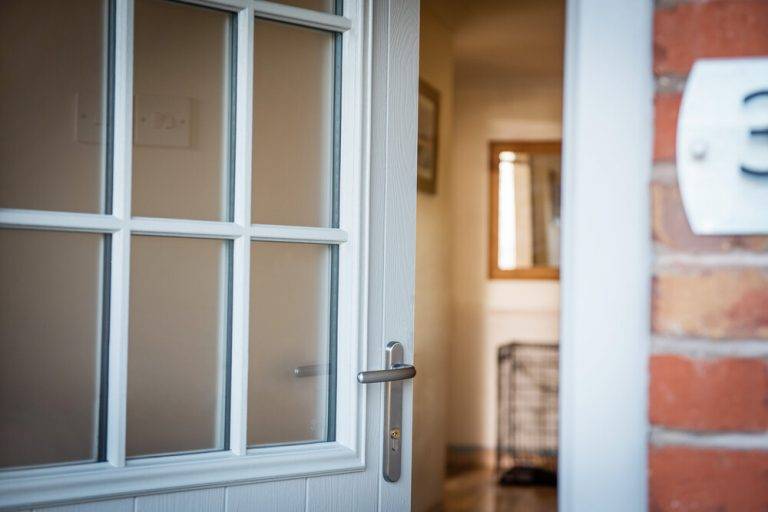
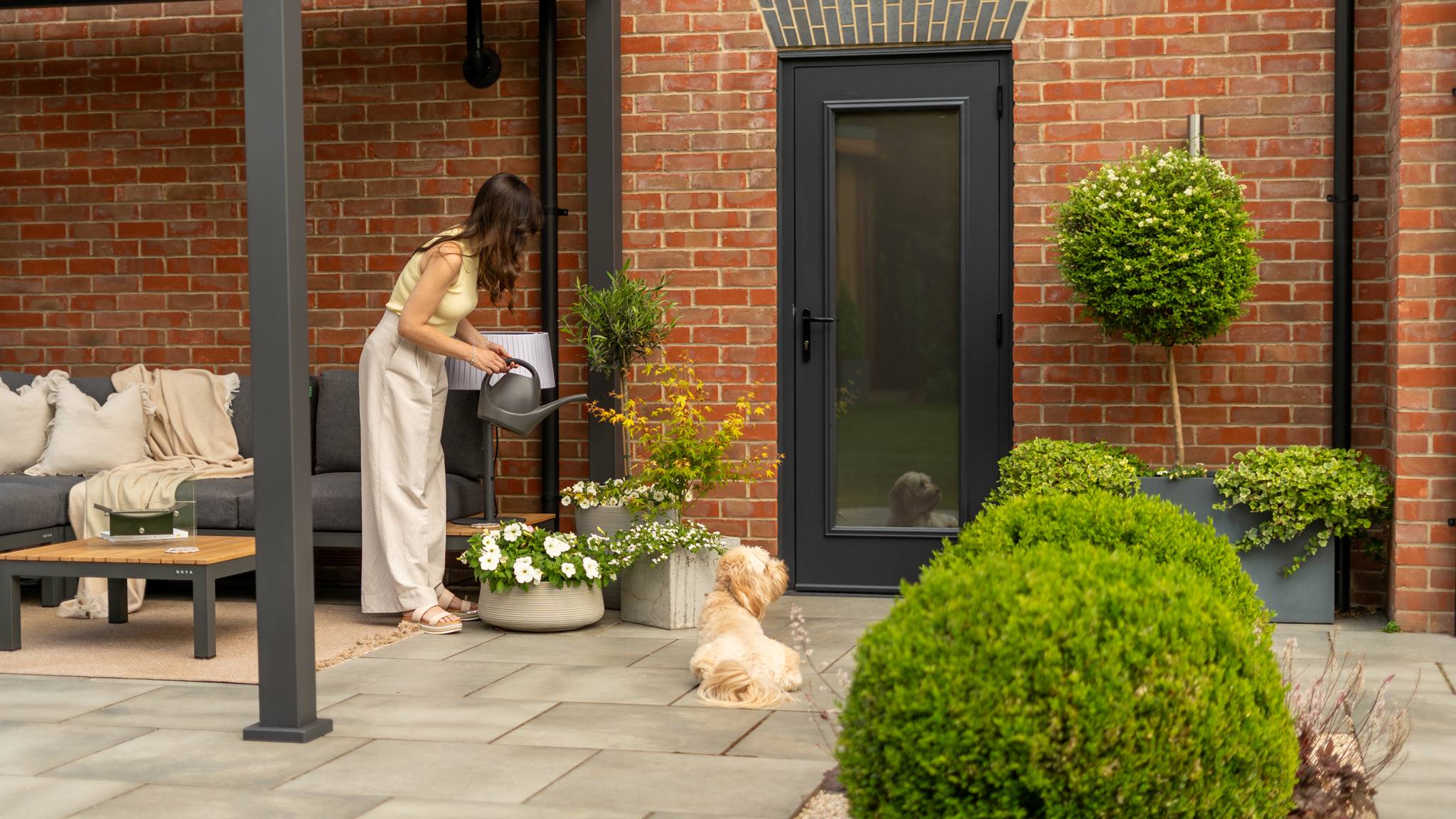
A back door provides an important connection between indoor living spaces and the garden, particularly from kitchens, dining rooms and utility rooms. Its design can influence natural light, views, accessibility and how connected the inside and outside of the home feel.
Replacing a traditional back door is an opportunity to improve both the appearance and practical performance of your home’s rear entrance. A modern composite back door provides a combination of design choice, security, durability and thermal performance.
Ways to Create a Better Indoor-Outdoor Connection
There are various ways that your chosen back door could help create a better connection between your home and garden.
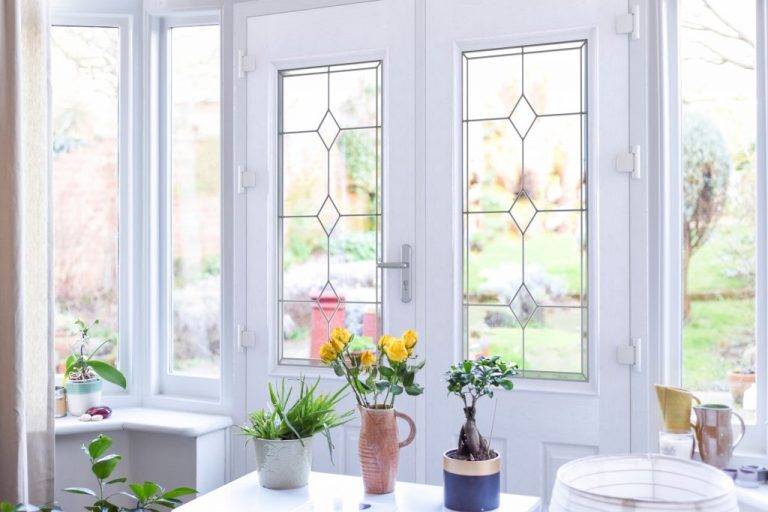
Introduce more glazing: choosing a back door with a larger glazed area can open up views of the garden and allow more natural light into the home.
Coordinate your colours: consider colours that complement surrounding windows, brickwork, render or garden-facing features to create a more cohesive appearance.
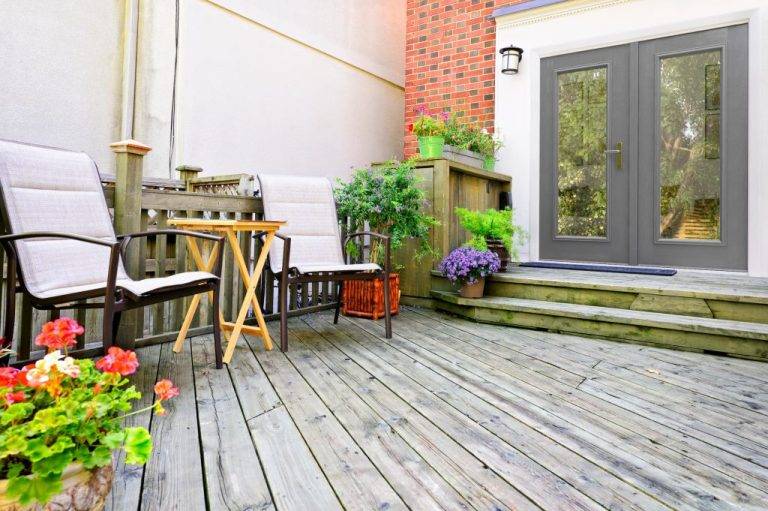
Consider the surrounding space: patios, pathways, planting and outdoor seating can help visually connect the doorway with the wider garden.
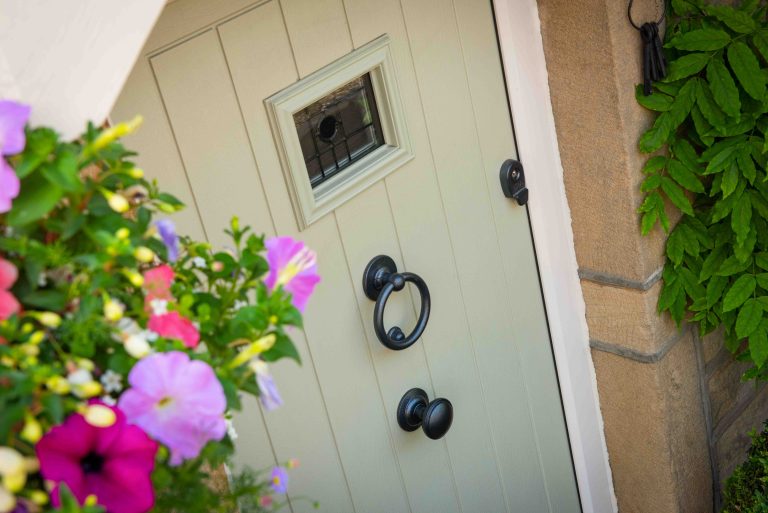
Choose complementary hardware: handles and other finishing details can help coordinate the door with the style of the property.
The right approach will depend on the room, your property and your individual priorities.

Choosing the Right Composite Back Door
When choosing your back door, aim to balance appearance with everyday practicality. Start by considering how much glazing is appropriate, balancing the amount of natural light and garden views you want with your preferred level of privacy.
Security is another important consideration, as with any external entrance. Thermal performance and weather resistance are also important, particularly for a door that will be used throughout the year.
Choose a colour and style that works with both the interior room and garden-facing exterior. Considering both sides can help create a more coordinated appearance inside and out.